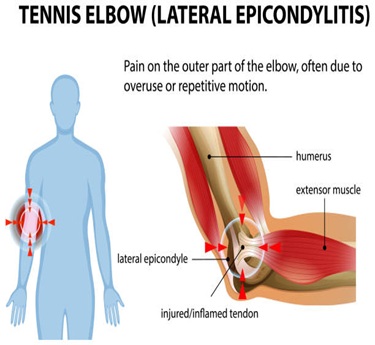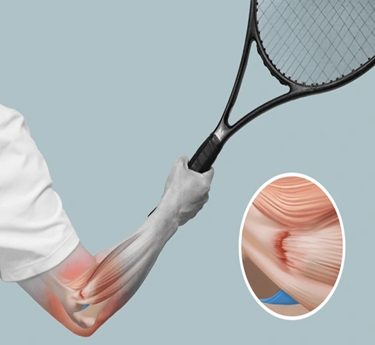

Lateral Epicondylitis, commonly known as Tennis Elbow, is a condition caused by inflammation or irritation of the tendons attached to the outer part of the elbow. It often results from repetitive wrist extension or gripping motions, commonly seen in racquet sports, carpentry, or computer work. Individuals typically experience pain on the outside of the elbow, weakness in grip strength, and discomfort during lifting or twisting motions. The pain may radiate down the forearm and is aggravated by repetitive use or strain. Early diagnosis and proper management can help alleviate symptoms and prevent chronic dysfunction.
Although Tennis Elbow can be painful, most cases improve with non-surgical treatments. Management includes rest, cold therapy, anti-inflammatory medications, and physical therapy focused on stretching and strengthening the forearm extensor muscles. Elbow straps or braces can help reduce tendon stress. Modifying activities that worsen symptoms is key to recovery. In some cases, corticosteroid injections or regenerative therapies like PRP may be advised to reduce inflammation and promote healing. Surgery is rarely needed and is considered only for persistent or severe cases. With consistent and early care, patients often regain full function and return to daily activities comfortably.

Lateral Epicondylitis, or Tennis Elbow, is an overuse injury involving the tendons on the outer part of the elbow. It results from repetitive wrist extension or gripping, leading to pain and weakness in hand function.
Diagnosing Tennis Elbow (Lateral Epicondylitis) involves clinical assessment, orthopedic testing, and imaging to evaluate tendon damage or inflammation on the outer side of the elbow.
Treatment for Tennis Elbow (Lateral Epicondylitis) focuses on relieving outer elbow pain, reducing tendon inflammation, and restoring arm strength through non-surgical approaches and rehabilitation.
Supportive therapies are crucial in managing Tennis Elbow by easing outer elbow discomfort, restoring tendon function, and reducing the risk of recurrence through targeted rehabilitation.